Territorial Availability: Available through Bertin Technologies only in France
- Correlated keywords
- P-SOH kits measures measurements cell-based CBAs oxidative damages oxidized reactive oxygen species ROS cells cellular pathways diseases proteins modifications sulfenylations oxidations cysteine residues redox-sensitive sensors molecular switches activates activating deactivates deactivating states stress-induced cancers intracellular pathological conditions sulfenic acids formations GC/MS GC-MS gas chromatography-mass spectrometry HPLC high-performance liquid detectors detections Western blots blotting ELISA enzymes immunoassay immunosorbents assays bioorthogonal chemical reporters DAz-2 cell-permeables chemoselectives in situ acid-modified
- Product Overview:
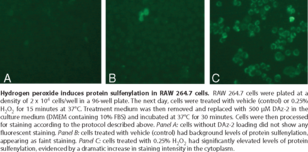
Reactive oxygen species (ROS) react with proteins, resulting in protein modification, such as protein sulfenylation through the reversible oxidation of cysteine residues. Redox-sensitive cysteine residues in proteins can function as sensors of ROS and serve as molecular switches, activating or deactivating proteins, following a change in oxidative state. However, the accumulation of proteins with irreversible cysteine oxidation is a hallmark of stress-induced cellular damage associated with diseases like cancer. Cayman’s Sulfenylated Protein Cell-Based Detection Kit employs the cell-permeable and chemoselective DAz-2 probe to detect sulfenic acid-modified proteins in living cells. It can be used to monitor intracellular sulfenylated protein levels in living cells to discriminate between normal and pathological conditions or to help identify new pathways regulated by sulfenic acid formation.
Cayman Chemical’s mission is to help make research possible by supplying scientists worldwide with the basic research tools necessary for advancing human and animal health. Our utmost commitment to healthcare researchers is to offer the highest quality products with an affordable pricing policy.
Our scientists are experts in the synthesis, purification, and characterization of biochemicals ranging from small drug-like heterocycles to complex biolipids, fatty acids, and many others. We are also highly skilled in all aspects of assay and antibody development, protein expression, crystallization, and structure determination.
Over the past thirty years, Cayman developed a deep knowledge base in lipid biochemistry, including research involving the arachidonic acid cascade, inositol phosphates, and cannabinoids. This knowledge enabled the production of reagents of exceptional quality for cancer, oxidative injury, epigenetics, neuroscience, inflammation, metabolism, and many additional lines of research.
Our organic and analytical chemists specialize in the rapid development of manufacturing processes and analytical methods to carry out clinical and commercial GMP-API production. Pre-clinical drug discovery efforts are currently underway in the areas of bone restoration and repair, muscular dystrophy, oncology, and inflammation. A separate group of Ph.D.-level scientists are dedicated to offering Hit-to-Lead Discovery and Profiling Services for epigenetic targets. Our knowledgeable chemists can be contracted to perform complete sample analysis for analytes measured by the majority of our assays. We also offer a wide range of analytical services using LC-MS/MS, HPLC, GC, and many other techniques.
Accreditations
ISO/IEC 17025:2005
ISO Guide 34:2009
Cayman is a leader in the field of emerging drugs of abuse, providing high-purity Schedule I-V Controlled Substances to federally-licensed laboratories and qualified academic research institutions for forensic analyses. We are certified by ACLASS Accreditation Services with dual accreditation to ISO/IEC 17025:2005 and ISO Guide 34:2009.